Workshop on Online Abuse and Harms
The 10th Workshop on Online Abuse and Harms (WOAH) at EMNLP 2026.
Keynotes
Invited Talk 1: Sara Tonelli (FBK)

About: TBA
Title: TBA
Abstract: TBA
Title: TBA
Abstract: TBA
Invited Talk 2: Su Lin Blodgett
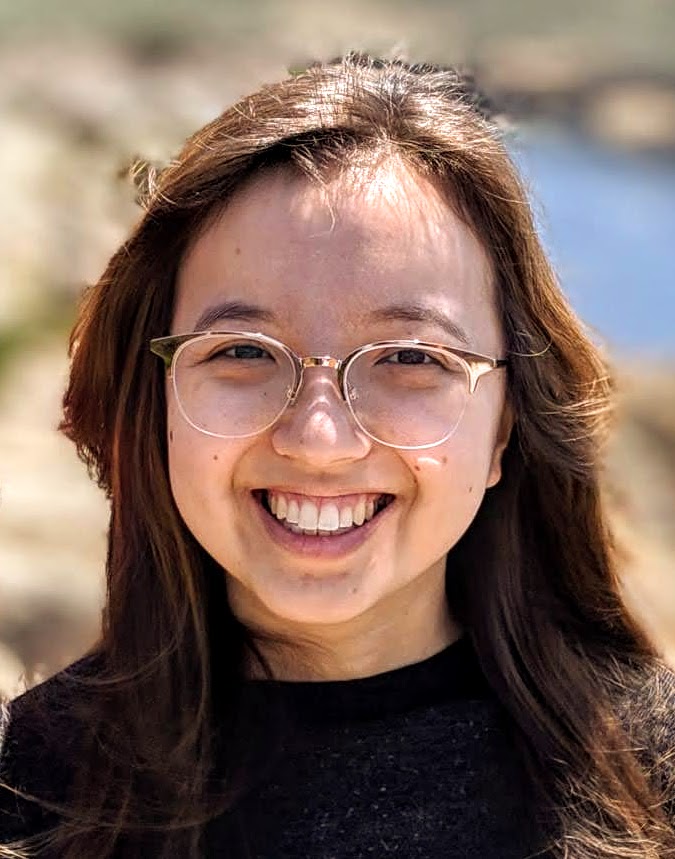
About:
I’m broadly interested in examining the social and ethical implications of natural language processing (NLP) technologies, and on creating more equitable, just, and empowering NLP technologies by centering people—who are inseparable from language—in technologies’ development and evaluation. My recent work has addressed principled evaluation and measurement, particularly of generative AI capabilities, behaviours, and impacts; understanding how people perceive and use generative AI; and supporting AI and NLP practitioners in their ethical work. I’ve also worked on using NLP approaches to examine language variation and change (computational sociolinguistics), for example developing models to identify language variation on social media. I approach my work from an interdisciplinary and sociotechnical perspective and draw inspiration from a wide range of disciplines, including NLP, responsible AI (RAI), human-computer interaction (HCI), and sociolinguistics.
I was previously a principal researcher in the Fairness, Accountability, Transparency, and Ethics in AI (FATE) group at Microsoft Research Montréal, where I was also a postdoctoral researcher. I completed my Ph.D. in computer science at the University of Massachusetts Amherst working in the Statistical Social Language Analysis Lab under the guidance of Brendan O’Connor, where I was also supported by the NSF Graduate Research Fellowship. I received my B.A. in mathematics from Wellesley College. I interned at Microsoft Research New York City in summer 2019, where I worked with Solon Barocas, Hal Daumé III, and Hanna Wallach. I was named one of the 2022 100 Brilliant Women in AI Ethics.
Title: TBA
Abstract: TBA
I was previously a principal researcher in the Fairness, Accountability, Transparency, and Ethics in AI (FATE) group at Microsoft Research Montréal, where I was also a postdoctoral researcher. I completed my Ph.D. in computer science at the University of Massachusetts Amherst working in the Statistical Social Language Analysis Lab under the guidance of Brendan O’Connor, where I was also supported by the NSF Graduate Research Fellowship. I received my B.A. in mathematics from Wellesley College. I interned at Microsoft Research New York City in summer 2019, where I worked with Solon Barocas, Hal Daumé III, and Hanna Wallach. I was named one of the 2022 100 Brilliant Women in AI Ethics.
Title: TBA
Abstract: TBA
Invited Talk 3: Sarah T. Roberts
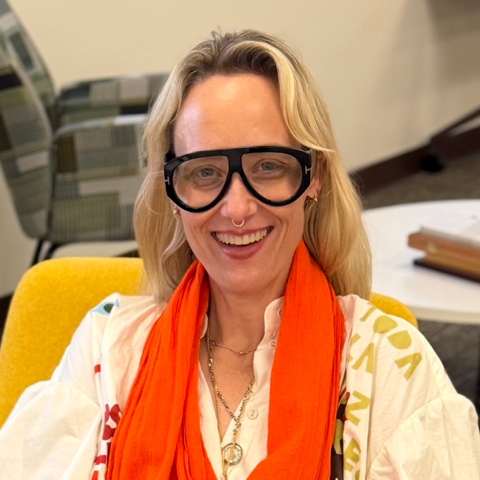
About:
Sarah T. Roberts is a full professor at UCLA (Gender Studies, Information Studies, Labor Studies), specializing in Internet and social media policy and culture, and the intersection of media, technology and society. She is the faculty director and co-founder of the UCLA Center for Critical Internet Inquiry (C2i2), co-director of the Minderoo Initiative on Technology & Power, and a research associate of the Oxford Internet Institute. Informed by feminist Science and Technology Studies perspectives and by critical theoretical frameworks, she is keenly interested in the way power, geopolitics and economics play out on and via the internet and through digital technologies, reproducing, reifying and exacerbating global inequities and social injustice. She is the president of the Association of Internet Researchers (AoIR) through 2027.
Roberts is the author of Behind the Screen: Content Moderation in the Shadows of Social Media, and is known for her work and insight into social media and internet culture, politics, economics and society. She holds a Ph.D. in Information Science from the University of Illinois at Urbana-Champaign, USA.
Title: TBA
Abstract: TBA
Roberts is the author of Behind the Screen: Content Moderation in the Shadows of Social Media, and is known for her work and insight into social media and internet culture, politics, economics and society. She holds a Ph.D. in Information Science from the University of Illinois at Urbana-Champaign, USA.
Title: TBA
Abstract: TBA